



E&OE
PODCAST INTERVIEW
THE ENERGY CONNECTION
FUTURE LIVING: CHEAPER ENERGY FOR EVERYONE WITH SARA PHILLIPS
THURSDAY, 18 JUNE 2026
Subjects: Renewable energy, solar panels, home batteries, EV charging, energy storage, climate change, energy costs, virtual power plants, energy efficiency, social housing, energy upgrades
SARA PHILLIPS (HOST): Putting solar panels on your roof or getting a home battery comes down to cost when you live in a home you own, but what if you live in an apartment or a rental? Overcoming the barriers that make it harder for people to switch to electric appliances, get access to energy storage to reduce their bills, or find an EV charger when they don’t have off-street parking are some of the things that keep our next two guests awake at night.
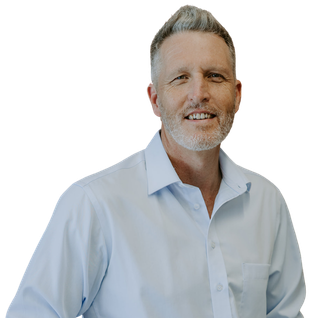
JOSH WILSON: I’m Josh Wilson. I’m the Federal Member for Fremantle in Western Australia. I’m also the Assistant Minister for Climate Change and Energy, and the Assistant Minister for Emergency Management.
PHILLIPS: Electricity bills keep going up. You’ve been doing some work at the community level to help address that. Can you talk us through how that works?
WILSON: We recognise that communities around Australia have been under cost pressures. Some of those have been brought by international crises, obviously the war in Ukraine from 2022 and then more recently the conflict in the Middle East.
We know that the best way of dealing with those pressures is for Australia to take up the opportunity of becoming a renewable energy superpower, and for everyone to share in that, as we make that transition to self-sufficient, clean energy that comes from the best solar and wind resources in the world, which we’re fortunate to enjoy here in Australia. It reduces prices and creates a whole series of other benefits. Of course, it makes a really significant contribution to one of the biggest challenges, if not the biggest challenge, which is dangerous climate change. And as we’re experiencing right now, it allows us to be free from the kinds of impacts that can come through global supply chain shocks as a result of global crises.
Over the summer we got to 50 per cent renewable energy, few people would have thought when we began that journey that by reaching 50 per cent half of the energy would come from households in the form of distributed energy, and yet that is the case, and so we have done a number of things to make sure that households and local governments and community organisations are able to have the benefit of clean energy technology and resources to bring down their energy costs through solar and batteries and energy efficient appliances, energy efficient standards when it comes to the built environment, all of those things that mean the reliance on gas and electricity that comes from coal-fired power and gas-fired power is less, with all of the benefits that I described.
PHILLIPS: The energy crisis in Iran has pushed a lot of people to suddenly consider an EV. We’ve seen sales go through the roof just recently. Will there be enough charging infrastructure?
WILSON: There will be broadly, there has to be, and we need to keep pushing very hard on that front. When we came to government, both the EV uptake in Australia and the charging infrastructure was very, very poor by international comparisons. One of the main reasons was Australia was one of only two or three countries that didn’t have vehicle emission standards, and so Australians were not able to even look at and choose the broad range of more energy efficient vehicles that people in every other country pretty much had access to. So, we made that change. That caused a tripling of the available EV models.
We’ve provided some direct tax system support, and of course we’re triple charging facilities already off a pretty low base, and we’re putting significant additional funding into expanding that, which we will need to do.
When we came to government, in calendar year 2022, if you think of a full electric or a plug-in hybrid, that represented about 1 in 50 new vehicle sales of the light passenger kind. In April this year, it was 27.5 pe cent, so somewhere between 1 in 4 and 1 in 3. That is a massive, massive shift, and people are doing that as Australians have done with home solar, and since the 1st of July last year with batteries, because Australians know that’s in their best interest, that they want to be in control of their energy future, and they want to be off the hook of high prices that are caused by international crises.
PHILLIPS: The home battery program that was instigated in July last year has been wildly successful, possibly beyond the government’s anticipated dreams. What other federal subsidy measures will support electrification?
WILSON: We’ve got a whole set of things in the field, and I’m always glad to try and draw people’s attention, because I think some of them probably aren’t as well seen.
We are the world leader when it comes to distributed solar. We’ve put our hand on the scale in relation to batteries, and as you say, it’s really taken off. If you look at the deployment of battery storage, we are responsible for 10 per cent of global battery storage, and battery power is the fastest growing category of power provision within our system, and it’s actually setting the market price more than any other source of energy, so that’s remarkable.
In addition to creating Australia’s first national EV strategy, we also introduced Australia’s first National Energy Performance Strategy. There was a billion dollars provided through the Clean Energy Finance Corporation to support discounted green finance for energy upgrades. We think that that program can deliver a lot more. I think that Australian households, if people are considering what they could do to make their own home more energy efficient and take advantage of some of these technologies, they should certainly Google ‘Home Energy Upgrade Fund’ and see if there’s not a provider that can help them consider what their best options might be, and people can get some advice, where it might be, look, your best bet is to make sure first that you’ve got roof insulation, then add solar, and so on, and so on, and there’s discounted finance to help people do that.
We know that there are categories of household that aren’t in a position to make that sort of choice. That’s why we created the Social Housing Energy Performance Initiative, with $800 million of Commonwealth funding, and $300 million from the states and territories. That’s to upgrade 100,000 social housing dwellings, making sure that you know some of the most cost-constrained, low-income Australian households don’t miss out.
We are also from the middle of this year extending the very successful NatHERS Home Energy Rating System to all Australian homes. Previously it only applied to new homes, but that meant that probably 7 in 10 Australian dwellings couldn’t get home energy ratings, and that housing stopped because it was built before the NatHERS system and the upgrades to the National Construction Code that have occurred in the 21st century, that they didn’t have the benefit of that kind of guidance. The average energy star rating of that housing stock, 7 in 10 of Australian households, is around three stars. And if you can take a house from a three-star rating to a five-star rating, noting that new builds now are pretty much required to be seven stars, you’ll reduce your energy use and therefore your energy costs by 40 per cent.
We just think that sometimes combining those things, having that energy rating system available to existing homes, and then having concessional finance through the Home Energy Upgrade Fund available, that that will spur kind of continued interest and continued change at the household level for the benefit of those people in terms of cost reductions.
PHILLIPS: Will we ever see a situation where government-owned housing stock has solar panels on the roof, battery in the garage, and so that they are able to enjoy the benefits of electrification to the same extent that wealthy Australians are?
WILSON: I think across our community, we should have that ambition. We should have the ambition that Australia can take up and deploy all the advantages of clean energy on a distributed basis and energy efficiency. Part of that will always be making sure that it occurs in a just and equitable way, and we focused on doing that through things like the SHEPI program that I mentioned, through the support we provide in micro grids to remote and regional communities, including First Nations communities, through our First Nations Clean Energy Strategy, and a range of things, but that will need to be a consistent, sustained focus.
The thing I guess that needs to be remembered is that as we make these changes, the changes that occur for an individual business or an individual household, they do gather up and have systemic benefits that everybody enjoys. I had an email from someone the other day saying that, you know, they had no interest in EVs, they like their six-cylinder car, they didn’t believe in climate change, and what was all this rubbish? It’s a bit like public transport, you can have a person who has no interest in public transport, and they want to be able to drive their car to and from work every day for the rest of their life. Every other person who takes the opportunity of a new light rail or a new improved bus service or a new improved train service, every other person who makes that choice is effectively one less driver, one fewer driver on the road, which even makes it better for, you know, Johnny, I’m going to drive my car until I die. And there are some similar things at work in the transition that we are making that at the moment the 380,000 Australians who have taken up a home battery they are contributing to the battery storage, which is essentially shifting the cheapest middle of the day solar to the evening peak, reducing the cost of the evening peak, reducing the cost to the energy system, which then flows through into lower wholesale prices and ultimately lower retail prices.
The benefits in terms of cost reduction of the progress that we are making is actually shared system-wide, even for people who haven’t yet put on solar or haven’t yet got a battery. But that doesn’t take away from the point, the main point of your question, which is making sure that we continue to see that there are parts of our community that are more able to take these steps and get the direct benefits from them, and we need to make sure that we focus on the parts of the community that are less able and support that change too.
PHILLIPS: In some parts of the world, we’re seeing things like plug and play batteries, balcony solar, all of these kind of things that you can just literally – Aldi is selling them in the UK, I believe, and you don’t even need an electrician to install it. Are you supportive of these kinds of technology solutions, which essentially bypass regulated schemes?
WILSON: Probably the last part of your question is the key. I mean, one of the things that we have in this country is a really, really smart, rigorous, high-quality set of regulatory frameworks that are in the best interests of all Australians, because they mean that we make even coordinated progress when we think of our energy system as a whole, but also that give comfort to ordinary Australians with respect to safety standards, and frankly, quality and value for money standards too.
This is an area where there’s lots of innovation, there’s lots of new ideas, and we’re obviously seeing companies develop all kinds of options. I think there’s nothing wrong with that, but all of those options should nevertheless be kind of considered and made available to the Australian community, subject to those kinds of regulations.
PHILLIPS: Now that more and more Australians have got batteries and solar, would you encourage them to join in with virtual power plants?
WILSON: I think people should have the option to look at a range of different energy plans and see the ones that suit them best, and I think in time to come, virtual power plants will be part of that, and maybe for some people I hear about VPPs, or virtual power plants, without really understanding what that means.
In essence, when we coordinate energy resources, they have greater value to the system. If the system can draw upon a hundred home batteries, when it needs to take energy out of batteries and into the system at a peak, or when the system is overloaded with an abundant solar and wants to push solar back out into distributed batteries to make sure that that really ultra cheap or virtually free solar is stored to be deployed later on, that’s of benefit. If you have thousands and thousands and thousands of individual home systems that are uncoordinated, they are less valuable systemically than when they are coordinated.
When people choose to be part of a VPP, they’re essentially saying, I’m happy if my solar and my battery gets coordinated as part of a group. That group then delivers the power or receives the power in a way that’s more valuable to the system, and they get to share in some of that cost benefit. Now we think it really is just a matter of common sense that Australians ought to have that option, so if you’re, you know, you’re on a particular power plan, you ought to be able to be presented with something that says, look, you can be part of a virtual power plant, you’ve got solar, you’ve got batteries, and you will get a better deal than you are currently getting for the solar that you put into the system. We think that that just makes sense. Obviously, it has systemic benefits, but what will make it compelling for the individual household is the benefit that they get.
PHILLIPS: Now we’ve heard about the Solar Sharer, which is coming soon, which is the idea that we’ll all get free electricity in the middle of the day. Is there a risk that people will get a bit silly and overuse electricity in the three hours of free electricity that they get?
WILSON: I don’t think there’s genuinely a risk systemically, because that’s why we know through Solar Sharer in the jurisdictions that that will apply, that there is that capacity. I think most people can imagine that the three-hour period will fall likely in the middle of the day, that’s when we have all of this abundant solar. It also happens to be the period when a lot of people are not home, kids are at school, people at work, but the whole concept of Solar Sharer is to time shift, like when we think about all of the things that make our energy system better. One of them is this concept of time shifting.
In the middle of the day, when the sun’s out, we’ve got a huge amount of solar, often much more than we are using, and so if you can take the demand and match it up with that excess supply, then the whole system works better. So that might be the case that people will schedule their pool pump to run at that period of time. It might be that people leave the house but set their dishwasher to run during that period of time, or maybe even a load of washing, those kinds of things. Certainly, it could be the case that people will charge their EVs. If there happens to be one car at home, you will charge your EV off the grid when the power is free, and that is for the benefit of the system.
So, you’ve just got this huge amount of solar, and it needs to go somewhere. Now, obviously, we want to keep increasing battery storage, and it can go there, but in the meantime, it would also be helpful if there was a bit of that time shifting.
Some of these things I explain to young people, or occasionally at dinner parties, and wonder why I don’t get invited back to these dinner parties, because I’m boring people with these arcane kind of conversations. But it’s a fascinating time to be alive. The energy system transformation that we are experiencing is utterly, utterly remarkable. To think that we’re going from a system which, for a long period of time, just had a few large fossil fuel based generation systems that had to essentially produce like 110% of what you might need at any point in time, and they were relatively inflexible, so you couldn’t just sort of make them go up and down, you had to have them pretty much putting out all this power and just pushing it all out. We’ve already made this remarkable progress away from fossil fuels and to a system that is much more distributed and much more dynamic, and some people will say, “Oh, well, doesn’t it make it more fragile?” But really, if you think about it, you know, when you had one big coal-fired power plant and there was a system failure, and we’re seeing that in our aging coal-fired power fleet all the time, that’s exactly when the lights go out.
Our system is now being reshaped in a much more dispersed and resilient way, and with households and businesses having much greater control over their own energy production and energy use.
PHILLIPS: When it comes to energy, what’s the one thing that keeps you up at night?
WILSON: I think the focus on an equitable transition. On the opportunity to make sure that as we go through this transformation that things happen in a fairer and a different way than in the past, and I think about First Nations participation.
A lot of the renewable energy generation and storage is occurring outside of the cities, and so the opportunity for rural and regional communities themselves that probably haven’t had the economic and employment opportunities that have accrued to people in the cities in the last sort of 50 years.
I think just keeping a focus on that part of the transition is probably one of the things that recurs for me, and that I’m constantly kind of coming back to, and trying to ask myself, and all the people I’m fortunate to work with, all the great public servants, and advocates out there, the Saul Griffiths, and the Parents for Climate.
That’s the thing, I guess, that I find inspiring is that there’s so much positive energy and enthusiasm for this challenge, and it’s coming from every direction, just as our energy is now starting to come from every direction
ENDS
Stay connected with Josh’s latest news and events.